
Looking Back
Following Barnabas farther than we intended.

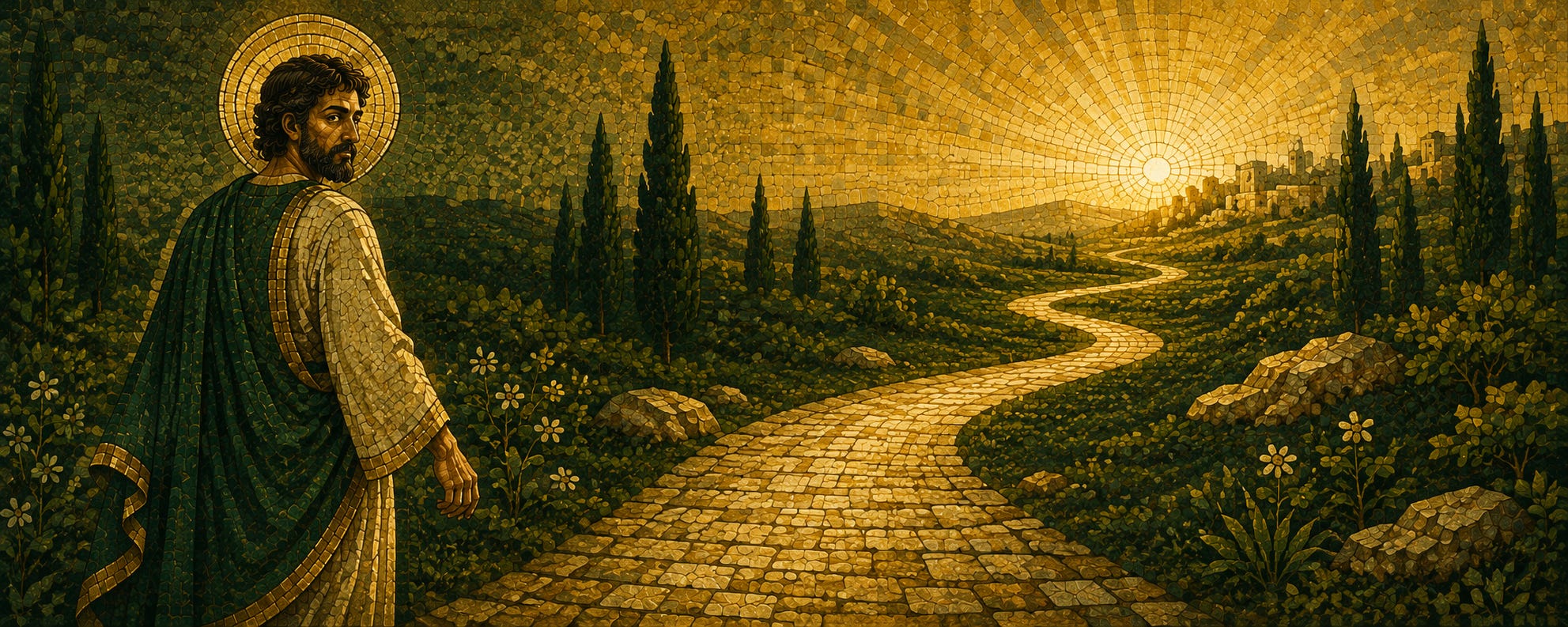
It is a Thursday in June and I have found the day’s collect before I am fully awake. The coffee is not made. The light is still thin. The prayer is short, three or four lines, easy to read past, and I almost do.
It is a prayer for Barnabas. I read it the way you read an inscription on a granite wall, with the gentle respect you give to someone safely gone. Here was a good man. He gave his life and his substance. He worked for the relief of the poor and the spread of the gospel. He did all of it, the prayer says, seeking not his own renown but the well-being of the Church. I nod along. It is easy to admire a man like that across twenty centuries. Generous, self-effacing, content to go unremembered. The kind of person you are glad existed.
And then the sentence reaches its real verb, the one I had skated past at the start, and I realize what it has been doing all along. Grant, O God, that we may follow the example of your faithful servant Barnabas. We. The prayer was never a description of a man long past. It was a request about me. I had come to honor Barnabas and somewhere in the grammar I had been turned into the petition. Without noticing, in my own voice, I had asked to become him.
Barnabas sold a field once and laid the money at the apostles’ feet without a speech. When the church was still frightened of Saul, who had been hunting it down, he was the one who vouched for him. He sought him out in Tarsus after the others had forgotten him, brought him back into the work, and then stood by while the man he had vouched for became Paul. Somewhere in those years the order of their names reversed. It had been Barnabas and Saul. It became Paul and Barnabas, his own name sliding to second, and he does not seem to have minded. To pray his collect is to ask for just that…not minding.
A collect is named for what it does. It gathers. It takes a scattered room, all those separate half-awake minds, and draws them up into a single sentence the whole congregation can hold in one breath. One voice, briefly, out of many. And it does the same for a person who prays it alone. It collects you.
The shape is always the same, once you see it. The collect calls upon God. It remembers one true thing. It asks for one thing. It asks it through Christ, and then it stops. It comes at a hinge in the morning office, after the psalms and the reading, just before the day’s own needs crowd in. Nothing in it is wasted. It is short enough to carry, light enough to take out the door into a day that will not otherwise make room for it.
Most collects arrive with their season and leave with it. This one is rarer. I will likely say it once, on the feast of Saint Barnabas, and then not again for a year. Too often I find the prayers have worn smooth in my mouth from the handling. This one keeps its edge because I meet it so seldom. In honesty, I say it before I have decided whether I mean it.
That is the thing the morning turned up. I reach - not his own renown - and something in me pulls back. Something resists and I wonder whether I would rather be the one remembered than the one who made room for someone else and then stepped quietly out of the story. The prayer asks me to want the opposite. I am not there yet. I say it before I am.
So, I try again:
Grant, O God, that we may follow the example of your faithful servant Barnabas, who, seeking not his own renown but the well-being of your Church, gave generously of his life and substance for the relief of the poor and the spread of the Gospel; through Jesus Christ our Lord, who lives and reigns with you and the Holy Spirit, one God, for ever and ever. Amen.
On the feast of Saint Barnabas, say the sentence once. Out loud if you can manage it. Let it be brief. Do not improve it. When you reach the part about renown, notice whether you flinch, and leave the flinch alone. Say the sentence anyway, ahead of meaning it, the way you say most true things first and grow into them after.
We cannot tell, while we are saying it, whether it is working. There is no receipt. We say one sentence on one morning and the day goes on as days do, and whatever the prayer is doing in each of us is happening too slowly to watch. That is the season we are in now. The long green weeks after the fire has come and gone, when nothing visibly happens. A seed does not feel like anything. We say the sentence, and wait, and one June, years from now, we may find that we do.