
The Standing Christ
St. Stephen, Suffering, and the Promise of Easter

The Church does not move us through Eastertide gently. It gives us fifty days and fills them with things we did not expect.
This Sunday it gives us Saint Stephen. Stephen is not an apostle. He is traditionally regarded as one of the first deacons, appointed in Acts 6 to oversee the distribution of food to widows. The first recorded martyr of the risen Christ was not Peter, not John, not anyone we might have guessed. It was the man who served lunch.
The Man Who Served Lunch
Stephen stands before the council and tells the story of Israel: Abraham, Joseph, Moses, David, and arrives at the same conclusion every prophet before him reached: you were not ready for what God was doing. Readiness has never been our strength. They cover their ears. They rush at him. They take him outside the city and stone him.
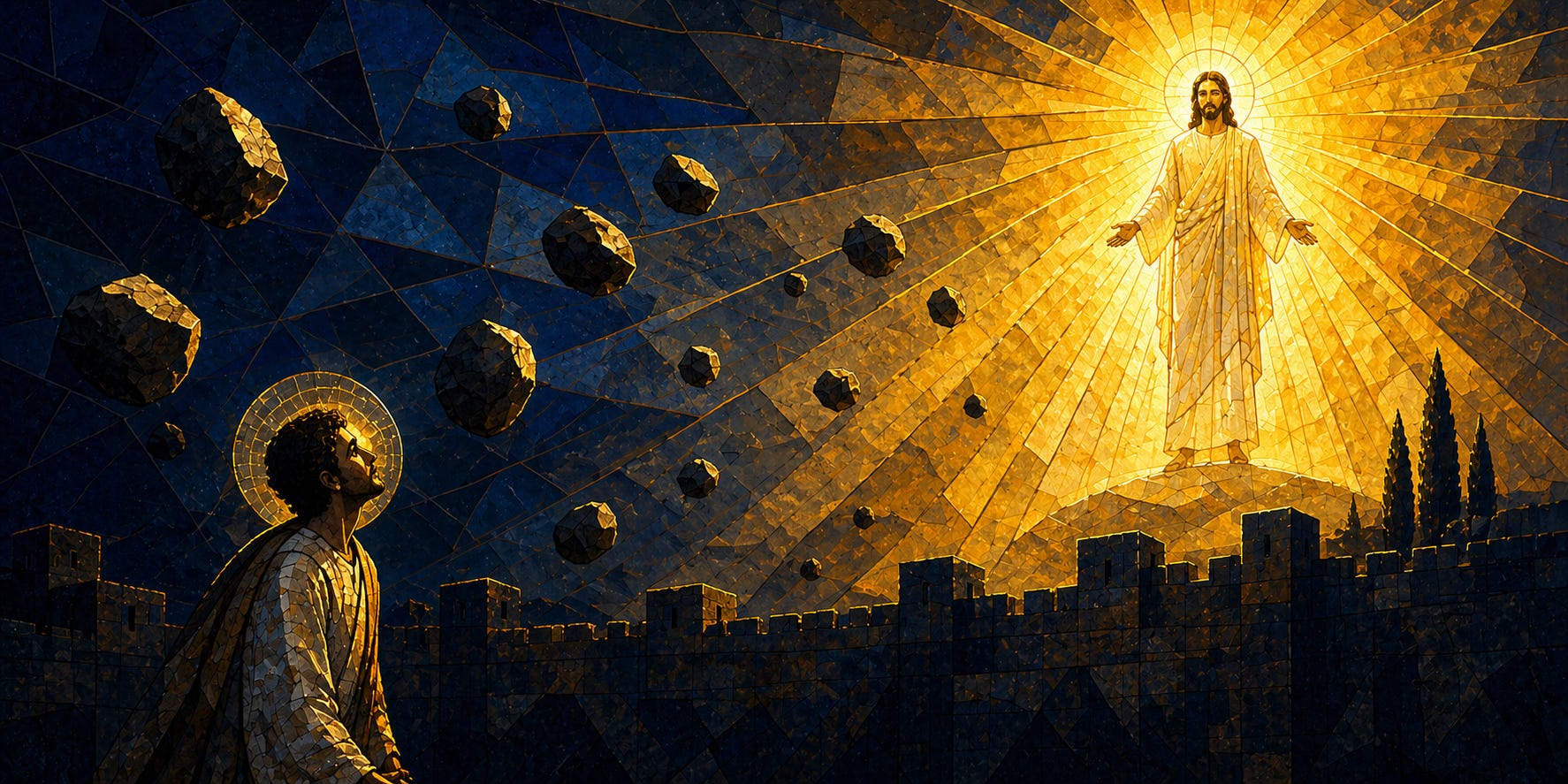
And here is the thing that has stayed with me. As the stones begin to fall, Stephen looks up. He sees heaven opened. He sees the glory of God. He sees Jesus, not seated at the right hand of the Father, as we are used to hearing, but standing. As if to receive him. As if to say: I see what is happening. I am with you in it.
The resurrection appears in the stoning. Not after it. Not instead of it. Inside it.
Most of us will not face stones. But the church still knows what it is to suffer openly. Christians in parts of northern Nigeria continue to face deadly attacks for professing the faith. In Lebanon, old Christian communities endure economic collapse, instability, and gradual disappearance. And yet signs of endurance remain. Even now, a massive Christ the Redeemer statue rises near the border, built as an act of witness.
Stephen has successors, even where we do not see them. So the first question the passage in Acts presses on us is this: who are these people? Not as an abstraction, but as actual human beings, alive right now, somewhere we are not looking. What does it mean to keep saying alleluia in the same week that they are keeping it too?
Covering Our Ears
The crowd covered their ears because they could not bear what Stephen was saying. We have our own ways of covering our ears. Most of them are quieter. A screen picked up without thinking. A day that accelerates before we remember what it is for. A life lived mostly on the surface of itself, where the depth is always available but rarely entered.
The resurrection, according to Stephen, appears in unexpected places. The standing Christ. The opened heaven. The moment that looks, from the outside, like defeat. The question is not whether this is still happening. The question is whether we have trained ourselves to notice it. Whether we have built habits of attention that interrupt the noise long enough for us to see what is actually in front of us.
The liturgical life is one answer to this. The Daily Office. The church calendar. The rhythm of feasts and fasts that keeps pulling our attention back before we have fully wandered away. Not because these practices are magic. Because we are forgetful, and we need the reminders.
Christ Standing With Us
Do not let your hearts be troubled. Jesus says this in the upper room, the night before he dies. He says it to people who are about to watch him be arrested, condemned, and executed. He is not telling them that the trouble will not come.
The Church places those words on the same Sunday as the stoning. Not by accident, but with purpose. It places Christ’s words beside Stephen’s death so we can hear them rightly. “Do not let your hearts be troubled” does not mean nothing hard will happen. It means Christ is with us in it. That is the promise.
I wear a necklace. It bears the image of Our Lady of Lourdes, Mary appearing to a peasant girl in a grotto, pointing, as she always does, toward her son. I wear it because I am forgetful, and the weight of it reminds me.
You will have your own reminders. A prayer book left out rather than shelved. A candle at the same hour each night. A hymn that follows you into the week without being invited. The question is not whether you need reminders. Most of us do. The question is whether we are willing to use them because readiness has never been our strength.
His promise has always come to us in tangible ways: flesh and wood, water and oil, bread and wine, stone and song, a necklace, this moment now. Do not let your hearts be troubled.
Stephen heard the promise. He looked up and found it true.
So, perhaps, may we.