The Offer Moses Refused
On faithfulness when walking away would be easier.
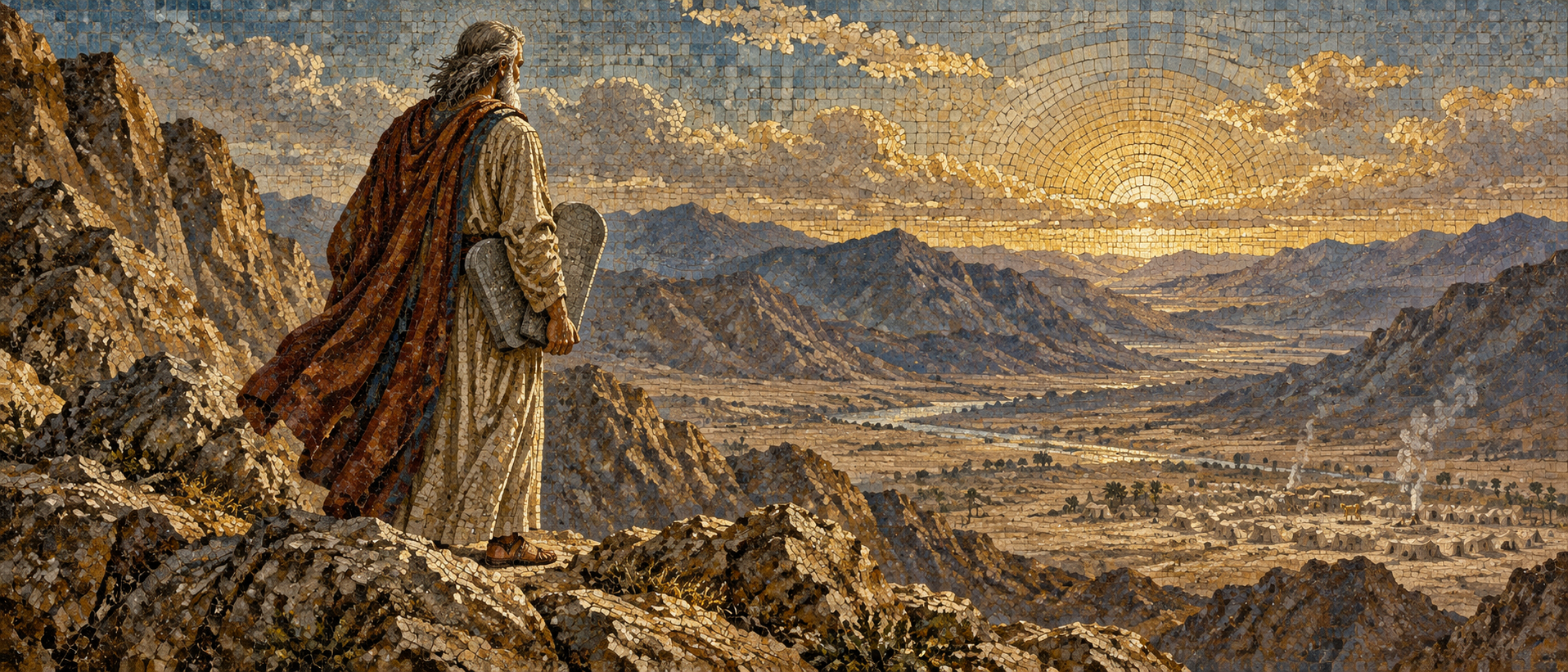
High on the mountain, Moses stands alone. Far below, the people of Israel are gathered around a golden calf. They have taken the gold they carried out of Egypt, melted it down, and fashioned something they can see and touch. There is music. There is dancing. The people are celebrating something they have made with their own hands. Moses has yet to see any of it. But God has.
The Lord tells Moses what has happened, and then makes an extraordinary offer. “Now let me alone,” God says, “and of you I will make a great nation.” Consider what Moses is being offered. He has led these people out of slavery. He has listened to their complaints, endured their accusations, and watched them question the very God who delivered them. Again and again, he has carried the burden of their fear and their faithlessness. Now he is offered a different future.
A clean beginning. A new people. A nation that would begin again with Moses, making him the father of a great people in his own right. He could leave behind everything that has made this journey so difficult. The promise would continue, but the people who have repeatedly disappointed him would not. And Moses would stand at the beginning of it all.
But Moses does not accept. Instead, he argues. There is a curious exchange in the conversation. God speaks of Israel as Moses’ people, the ones Moses brought out of Egypt. Moses responds by calling them God’s people, the ones God brought out with great power and a mighty hand. Moses asks what the Egyptians will say if the God who rescued Israel now destroys them in the wilderness. And then he reaches further back, invoking Abraham, Isaac, and Israel, and the promises God made long before Moses was born. Offered the opportunity to become the founder of a new people, Moses points back to those who came before him.
Moses has done nothing wrong here. He has not fashioned the calf or joined the celebration. He has been on the mountain, faithfully doing what God asked of him. Of everyone involved, he has the strongest claim to being separated from what has happened below. He could walk away without having to defend himself.
We know something about the temptation to distance ourselves from people who have disappointed us. A friend makes a decision we cannot understand. A family member repeats a mistake we thought was behind them. There can be a certain satisfaction in drawing the line. In being able to say that whatever happened, we were not part of it.
And sometimes distance is necessary. Remaining connected does not mean accepting mistreatment or overlooking harm. But other times, the distance serves a different purpose. It allows us to preserve a more comfortable account of ourselves, one in which another person’s failure has nothing to do with us.
Moses seems to understand something about this. He offers no excuse for Israel’s behavior. When he eventually descends the mountain and witnesses it himself, his anger will be fierce enough to shatter the stone tablets he carries. But before any of that happens, he pleads for the very people who have betrayed the covenant. And he bases his appeal not on their goodness, but on God’s faithfulness.
The promise was made to Abraham and his descendants. Moses refuses to become its sole beneficiary simply because he has remained faithful when others have not.
We can become so concerned with being on the right side of a situation that we lose interest in what happens to those on the wrong side of it. We can mistake our innocence for freedom from responsibility. Moses shows another possibility. He remains willing to speak for people whose actions he cannot defend. Later in the chapter, he will go so far as to ask that his own name be blotted from God’s book if they cannot be forgiven. Their future matters enough to him that he is willing to place his own beside it.
And God listens. Exodus tells us that God changes his mind about the destruction he had threatened. Moses’ intercession matters. His willingness to stand with an unfaithful people becomes part of the way God’s mercy reaches them.
Generations later, Israel was still singing about this day. Psalm 106 remembers it without flattering anyone. The people, it says, exchanged their glory for the image of an ox that feeds on grass. And God would have destroyed them, had not Moses his chosen stood before him in the breach. A breach is the broken place in a wall. No one stands there to keep himself safe.
But nothing about that mercy makes what comes next easy. The golden calf is still standing in the camp. Israel’s betrayal is still real. Moses will have to confront what the people have done, and the consequences will be painful.
When Moses comes down from the mountain, he is carrying the law to people who have already broken it. They have no idea that the man coming toward them has just pleaded for their lives.