On Waiting Through the Longest Part of the Night
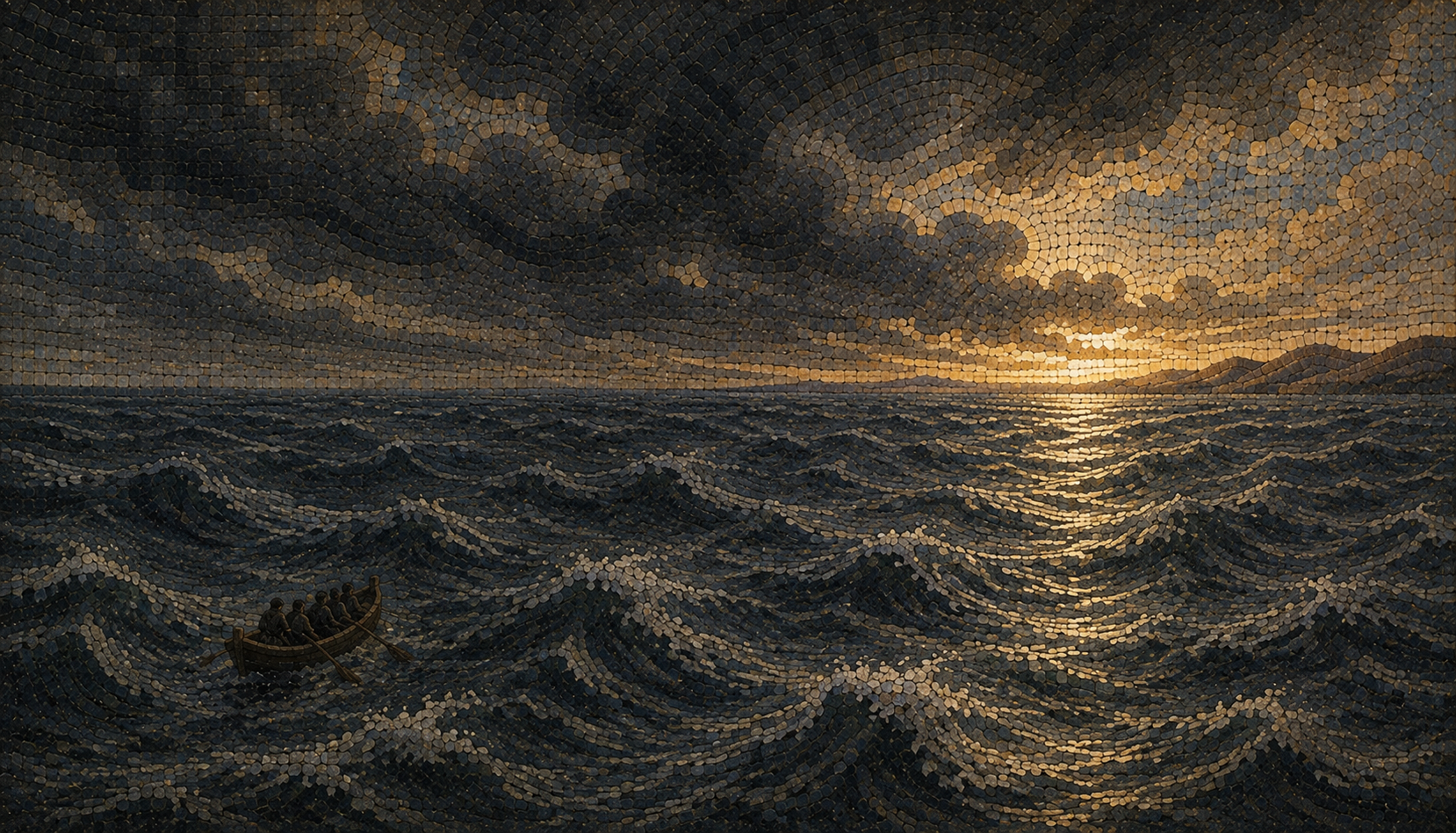
He made them get into the boat. That is the verb Matthew uses. The crowds were still full of bread, the grass still pressed flat where five thousand had sat down, and Jesus compelled his disciples toward the water while he sent everyone else home. Then he went up the mountain by himself to pray.
Evening came. The boat was far from land by then, and the wind turned against it.
Roman soldiers divided the night into four watches. The fourth ran from three in the morning until six. It is the stretch when the night has already lasted as long as a night can last, when the body has stopped believing in morning as anything more than a rumor. Matthew says that is when Jesus came to them. Not at evening, when the storm began. Not at midnight, when they still had strength. In the fourth watch, walking on the sea.
Which means the disciples rowed for hours.
Whatever time they started, it was a long time to do the right thing without seeing progress. They were not in that storm because they had wandered. They were exactly where he had sent them. The obedience and the headwind occupied the same water. I want a storm to mean I took a wrong turn somewhere, because a wrong turn can be corrected. It costs me more to believe I can be in the right place, doing the thing I was sent to do, and still make no progress against the wind.
Matthew never tells us that Jesus saw them struggling against the wind. He tells us only that Jesus prayed, the disciples rowed, and sometime during the fourth watch he came. The silence is the hard part. It is also the honest part. Most nights of rowing pass without any assurance that you are watched.
We usually treat waiting as though we are in the lobby outside the room where God works. But that is not the shape of this story. When help comes to the exhausted disciples, it does not come as rescue from the sea. It comes across the sea, walking on the very thing that is working against them. The wind does not stop when he appears. It stops when he climbs into the boat. He does not remove the water between them. He crosses it.
And when he came, they screamed. They mistook him for a ghost. Waiting can do that. Wait long enough and the answer becomes harder to recognize than the problem. They had been waiting so long that arrival looked like a ghost.
“Take heart. It is I. Do not be afraid.” In Greek, the middle sentence is two words. Ego eimi. I am. It is the name spoken from the burning bush, the answer Moses received when he asked who was sending him into an impossible assignment. Matthew’s first readers would have heard it. Out on the water, the answer to the hours of silence is not an explanation. It is a name.
He says it before the wind changes. He says it while the storm is still fully itself.
The disciples endured a hard night. Some fourth watches run longer. Someone I love has been in pain for years. The specialists have come and gone. So have the medications that were supposed to be different. The prayers for relief are old enough now that they have worn smooth, like stones handled too long. A night on the Sea of Galilee is short next to that, and I will not pretend otherwise. Scripture does not tell me why some are given hours of headwind and others are given decades. But it is worth noticing which hour the story chooses. Israel stood trapped against a sea once before, and it was in the morning watch, just before dawn, that the Lord made a way through the waters. The watch before dawn is not the hour God forgets his people. It is often the hour he makes himself known.
I do not know what your fourth watch is, or how long you have been rowing. Perhaps no one else even knows how tired you are. The rowing continues. The prayers continue. The wind has not changed.
The wind held until he was in the boat. The name came first. Out over water that had been fighting against them since evening, before the calm and before the worship, the answer came without explanation.
I am.
Do not be afraid.